

Apolipoprotein B: Know Your Number
Branch Retinal Artery Occlusion and Central Retinal Artery Occlusion are two causes of permanent visual loss. The degree of visual loss in these conditions can range from very mild to very severe. In both conditions, visual loss is caused by arterial blockage due to a cholesterol plaque. In these instances, the plaque blocks nutrient-rich blood […]
Read More
INNOVATIONS IN GLAUCOMA TREATMENT – HOW EMERGING TECHNOLOGY IS CHANGING PRACTICE
Glaucoma remains the leading cause of irreversible blindness worldwide. The disease is often asymptomatic until a significant amount of vision is affected, which is usually in a late stage of the disease. Because of the subtle and often deceptive natural course of this illness, it is important to detect its signs as early as possible […]
Read More
A SPOTLIGHT ON GEOGRAPHIC ATROPHY
Geographic Atrophy Awareness Week: December 1 – December 7 Approximately 2 million Americans suffer from a severe form of “Dry” Age-Related Macular Degeneration (AMD) known as Geographic Atrophy (GA). GA is an advanced and progressive form of AMD that primarily affects the central retina – the light-sensitive tissue at the back of the eye. Unlike […]
Read More
Thyroid Eye Disease
Thyroid eye disease (TED) is an autoimmune inflammatory disorder that affects the tissue in and around the eye socket, also known as the orbit. It is most common in patients with Graves’ disease, affecting 20 to 50% of patients. It can also be associated with Hashimoto’s thyroiditis and patients with normal thyroid function (euthyroid). The […]
Read More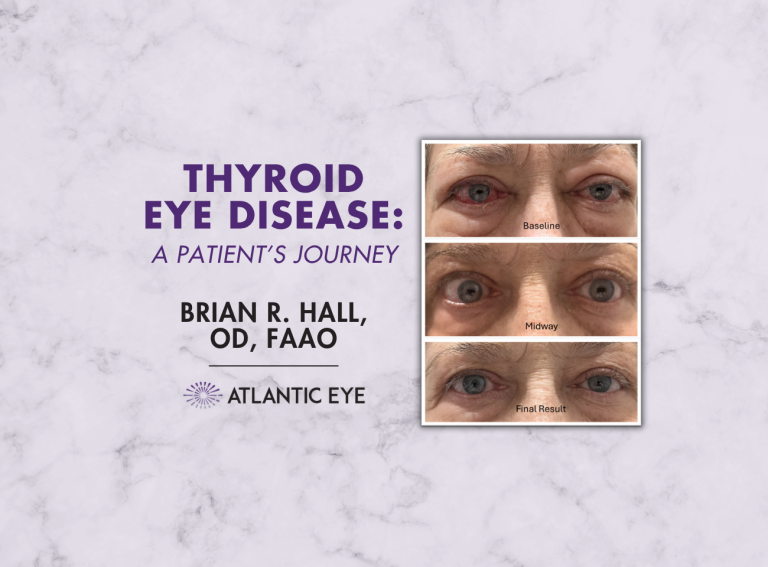
UVEITIS
Eye Diseases,Eye Health,Prevention
There are few conditions that can create more discomfort for a patient’s eyes compared to uveitis. Uveitis is characterized by persistent and increasing inflammation within the eye known as the uveal track. This condition can manifest in various locations along this track and may be triggered due to a myriad of different reasons. Most commonly, […]
Read More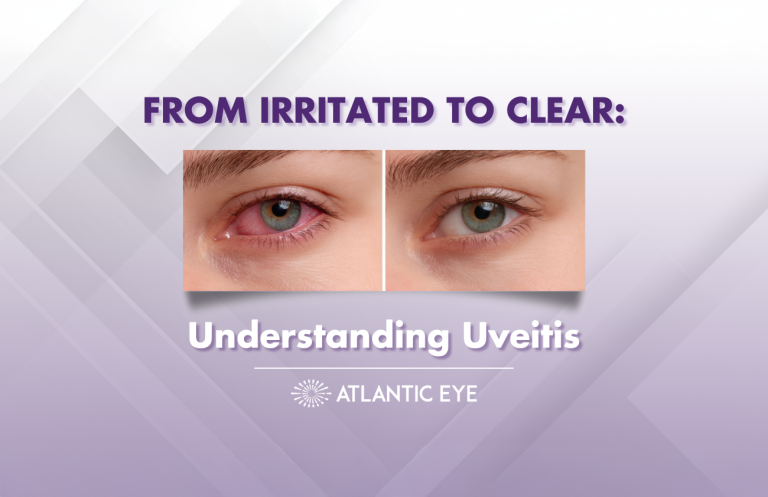
DRY EYE DISEASE: WHAT YOU NEED TO KNOW
Eye Diseases,Eye Health,Prevention
Background: According to the American Academy of Ophthalmology, approximately 16 million Americans suffer from dry eye disease. Dry eye disease (DED) can negatively affect not only your vision but also your quality of life. Its prevalence is increasing, and it can affect people of all ages. DED is chronic and progressive, making diagnosis and treatment […]
Read More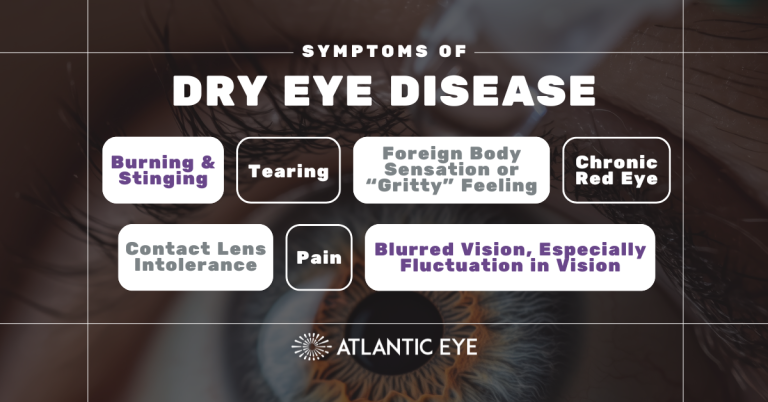
CATARACT AWARENESS MONTH
Eye Diseases,Eye Health,Prevention
Here at Atlantic Eye, we treat a wide variety of conditions that affect the eyes, but few are as common and prevalent as cataracts. In the US, about half of adults over the age of 75 are affected by cataracts. Many people have heard of cataracts because of how common this condition is, but I […]
Read More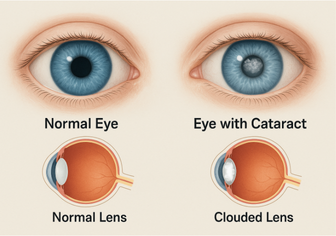
PHOTOBIOMODULATION (PBM): A New Treatment for “Dry” Age-Related Macular Degeneration
Eye Care,Eye Diseases,Eye Health
HISTORY AND BACKGROUND: Age-Related Macular Degeneration (ARMD) is the leading cause of visual impairment for patients over 65 years of age. It is based upon genetic factors, aging factors and environmental factors. It comes in two types: A) The more prevalent “Dry” type, where there are no findings of leakage or bleeding and B) The […]
Read More
Stephen Nedoroscik, the Olympic ‘Pommel Horse Guy,’ Bringing Awareness to Strabismus – What Exactly Is It?
Olympic gymnast Stephen Nedoroscik did not let strabismus, an eye disorder commonly called crossed eyes, stop him from training, qualifying, and competing in his chosen event – in fact, performing so well on Pommel Horse that he earned a bronze medal for the 2024 U.S. men’s gymnastics team, their first in 16 years! But what […]
Read More
Diabetes and Your Eyes: Understanding Diabetic Retinopathy
Eye Care,Eye Diseases,Prevention
If you (or a loved one) have diabetes, you know that the disease affects the body’s ability to produce or use insulin effectively to control blood sugar (glucose) levels. Over time, this excess glucose can damage vital organs of the body, including the eyes. Even when the disease is well-controlled, people with diabetes should get […]
Read More